It was in St. Paul, Minnesota where we discovered the hidden gem known as the Pig’s Eye Island Heron Rookery. And by “discovered,” I don’t mean that it wasn’t clearly identified on our map. It was. It just wasn’t a part of our planned route that particular day. But after struggling for five miles to make headway with a gusty southeasterly wind, we checked the map and eagerly ducked into the narrow slough on the lee side of the river.
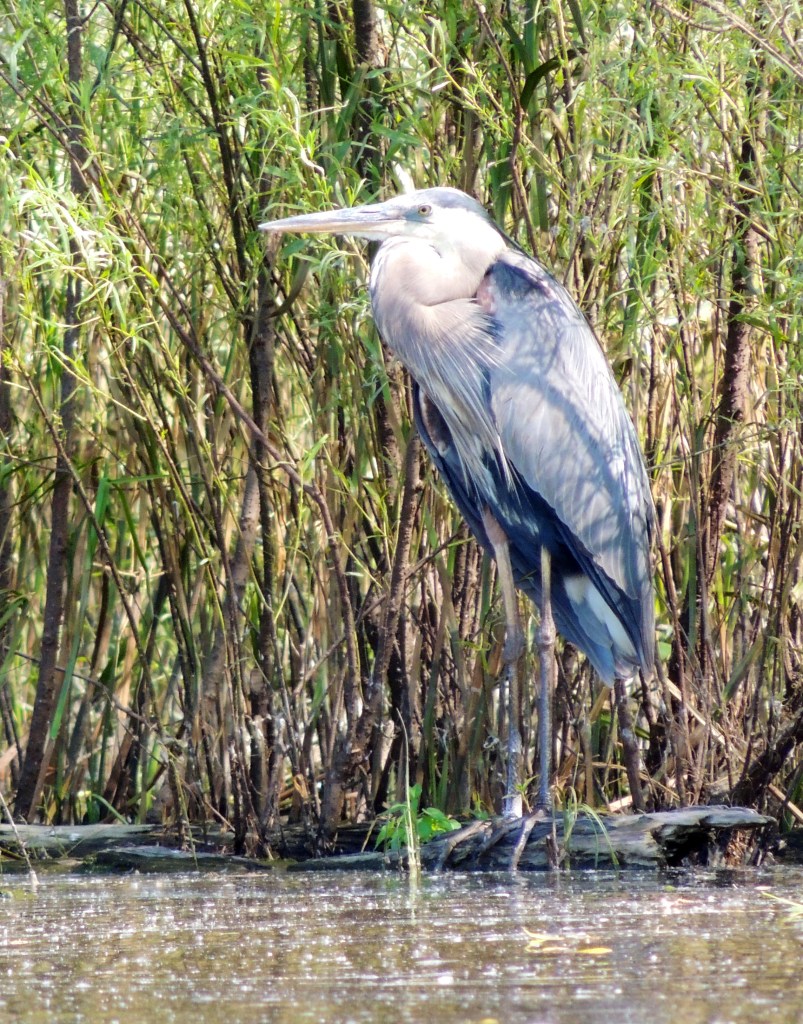
We found ourselves gliding through the serene waters surrounding one of the largest nesting site sanctuaries in the state. Established as a SNA (Scientific and Natural Area), Pig’s Eye Rookery is accessible only by water. There aren’t any maintained trails or recreational facilities, either. But this floodplain forest provides a perfect nesting habitat for colonial birds like egrets, great blue herons, double-breasted cormorants, pelicans, and black-crowned night herons.
"Silent sentinel stands watch
among wind-blown cattails,
seed heads not yet formed.
Stick legs still, neck stretched taught,
hidden, but for wispy bib feathers
and golden Mona Lisa eyes."
- excerpt from "Pig's Eye Heron Rookery"
It was not until later that I researched the name for the rookery itself. I found it curious that this natural area was named after a man of quite dubious character. Before Minnesota achieved statehood, Pierre Parrant, a French Canadian fur trader, lived in various locations in the vicinity of what is now St. Paul. Blind in one eye, he wore an eye patch on that side. The other eye appeared unique enough that he acquired the nickname “Pig’s Eye” Parrant. In 1838, he made a claim on a tract of land near what was then known as Fountain Cave. The spring inside the cave provided a steady water supply for the still he used to distill alcohol. He built a small shack and tavern, recognized as the “first habitation and the first business house of St. Paul.” He became so widely known that residents, riverboat crews, and even soldiers at nearby Fort Snelling became customers. Area folklore claims that the area was referred to by the name of Pig’s Eye for a time, before a Catholic priest named Lucien Galtier built a small chapel there. Incensed by the lifestyle of the current namesake, he reportedly felt the need for a conversion and chose St. Paul as a more suitable name for the growing village.
"I find it curious, this peaceful place
named for a bootlegging fur trader
who happened to put down roots,
build a still in a cave, sell hooch
to indigenous residents, here before,
settlers and soldiers who came along later."
-excerpt from "Pig's Eye Heron Rookery"
Thank you for taking the time to read the background of my poetry! Come back next week to hear about some of the bald eagles we saw, including one we found doing some fishing in a stump field. If you’d like to order your own copy of Mississippi Meanderings, or a copy for a nature-loving friend, you can visit http://www.finishinglinepress.com or use this link to go right to the page.
Gratefully, Barb
 Author Barb Geiger