I clearly remember when bald eagles were finally added to the Endangered Species List in 1978. In school, we had learned for years about the declining eagle population and tracked the data on the numbers of nesting pairs remaining. We were concerned to see, firsthand, the effects of habitat destruction and the consequences of widespread use of the insecticide DDT. Sad as it was, the listing helped serve as a wake-up call. Several amendments had already been added to the Bald and Golden Eagle Protection Act of 1940 and its enforcement became stricter. Being officially on the list extended the extra protection of the Endangered Species Act of 1973 to bald eagles. In addition, the U.S. ban on DDT and the DNR bald eagle recovery programs in many states contributed greatly to a population rebound. In 2007, the bald eagle was officially removed from the national list of endangered species. Strict regulations are still in effect, however, to ensure their recovery will last.
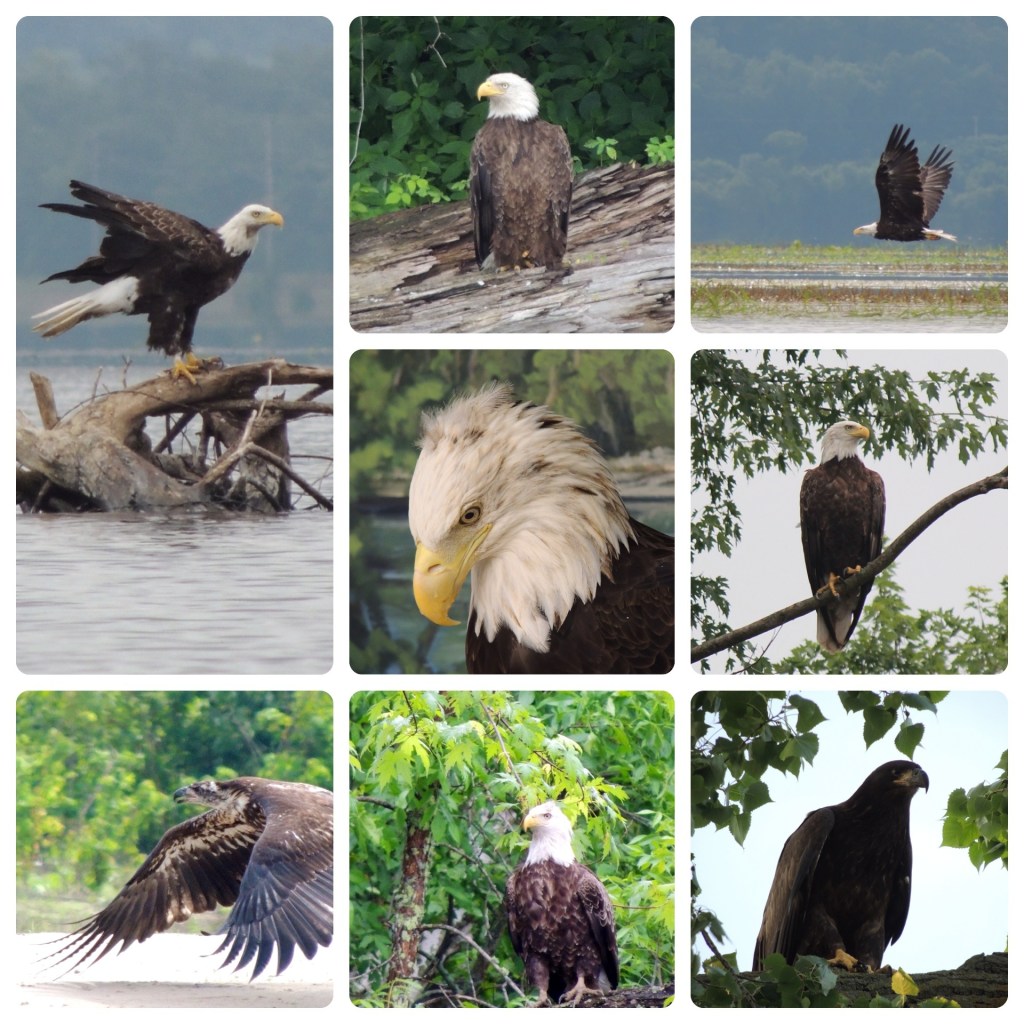
As we paddled the Mississippi, we were comforted by the number of bald eagles we witnessed, especially in the states of Minnesota, Wisconsin and Iowa. Each eagle sighting was awe-inspiring: in trees along the river, soaring on air currents, watching us from on high at a campground, skimming the surface of the water, or standing on a stump in the shallows, searching for a meal (as in the case of my poem, “Stump Field Fishing”).
"Curved talons grip gnarly roots,
arched in tangles above surface ripples.
Muscular wings rise, spread for balance,
reveal baggy feathered shorts,
legs surprisingly sturdy and tall."
- Excerpt from "Stump Field Fishing"
In Wabasha, Minnesota, we had a chance to tour the National Eagle Center, right along the shores of the Mississippi River. If you haven’t visited yet, you may wish to add it to your bucket list. We listened to an informational talk about bald eagles, which taught us about their sizes, ranges, diet, habits, and vocalizations. We got to see a variety of exhibits, including a scale model of a bald eagle’s nest, which we were allowed to explore. Designed for families, there was something for everyone to learn and see. One of the most interesting things for me was meeting and learning the rescue story of each of the Bald Eagle Ambassadors who then lived at the center. Currently, there are three adult bald eagles, one juvenile eagle, and a red-tailed hawk. In addition to offering visits like ours, the National Eagle Center schedules tours, field trips, eagle watching outings and even river cruises. You can learn more about them at their website, www.nationaleaglecenter.org.
I hope you have been enjoying a sampling of the poems in my new chapbook, Mississippi Meanderings. I’m currently working on a free, downloadable discussion guide for the book with background information, discussion questions and writing prompts. I’m hoping that it will be helpful for readers and writers, as well as for book club discussions and school presentations. Stay tuned! Next week, I’ll post about being the only boat (as we often were) going through a concrete lock over a thousand times our size!
If you have already pre-ordered Mississippi Meanderings, thank you. If you want to wait, or just aren’t interested in poetry, no problem! Feel free to pop in and read all these stories anyway! But if you’d like to order a copy before May 31st, you can do so at www.finishinglinepress.com. Best wishes as always, Barb
 Author Barb Geiger